The National Archaeological Museum on Mother Teresa Square is the best place in Tirana to see Albania’s ancient past, from prehistoric tools to Illyrian jewelry, Greek pottery and Roman sculpture. With the National History Museum closed until 2028, it’s the main museum in the capital for anything before the Middle Ages.
| Quick facts | |
|---|---|
| Where | Sheshi Nënë Tereza 3, at the end of the main boulevard (Google Maps) |
| Hours | Around 09:00–15:00 daily (some later opening on certain days) |
| Price | About 300 ALL for foreign visitors |
| Time needed | 45 minutes to 1 hour |
What you’ll see
If you love archaeology or ancient history, you’ll have a great time here. The museum holds more than 18,000 objects from Albania’s Illyrian, Greek, Roman and Byzantine periods, and it traces people living in this part of the Balkans back to settlements from around 1000 BC. Room by room you move through pottery, jewelry and mosaics, from simple everyday pieces to finely worked ornaments.
What makes the collection worth your time is the bigger picture it builds. Together, the finds show how goods and ideas traveled along the ancient trade routes through Albania, what the Illyrian tribes believed and how they buried their dead, and what daily life looked like in the Greek colonies and Roman towns along this coast. It’s one of the most important cultural institutions in the country, and the best introduction in Tirana to the ancient sites you might visit later, like Butrint, Apollonia and Durrës.
The museum and its building
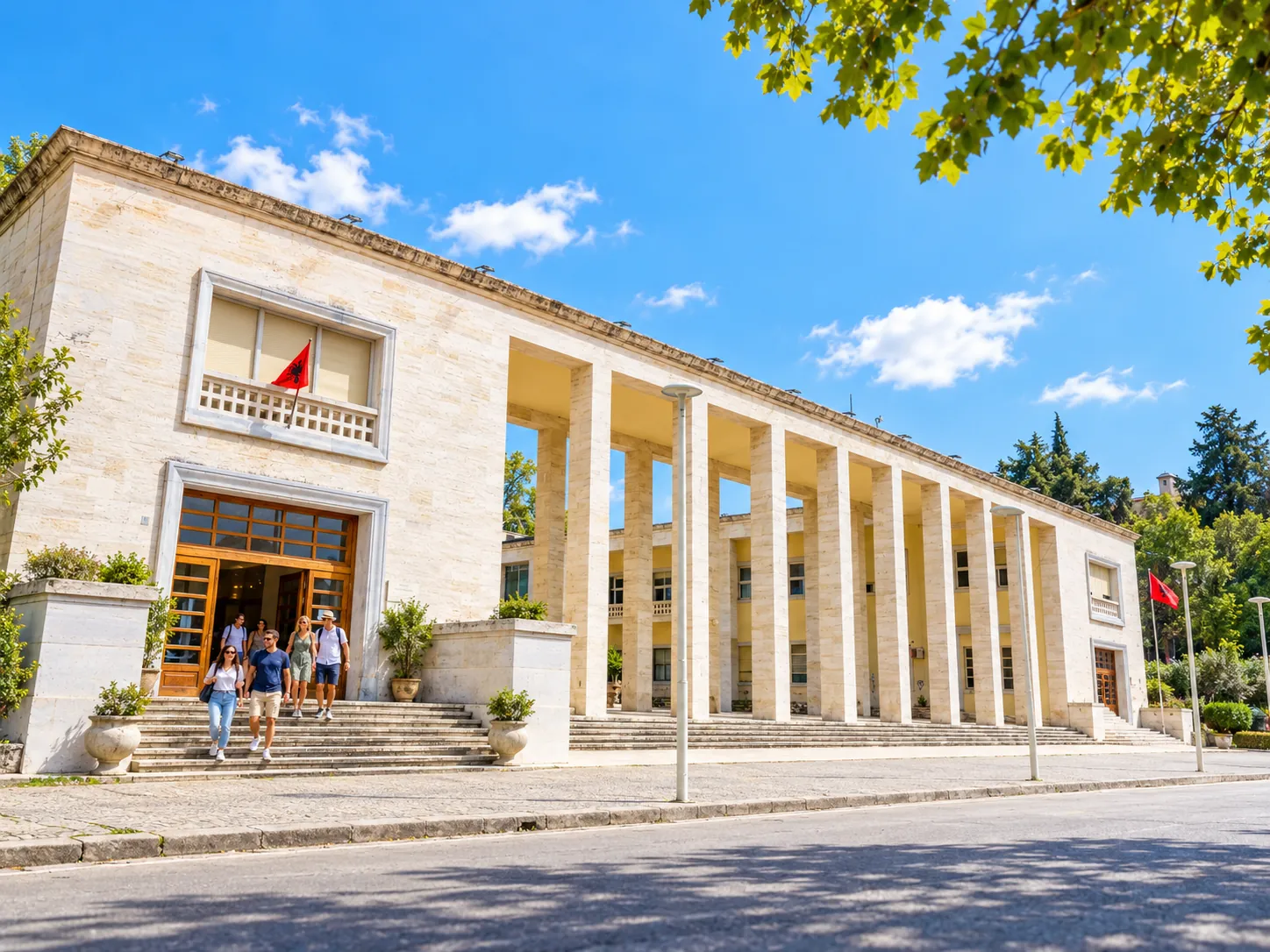
This was the first museum to open in Albania after the Second World War, in 1948, and it shares its building with the Institute of Archaeology. The building itself is worth a look: it was designed by the Italian architect Gherardo Bosio in 1939 as the headquarters of a fascist youth organization during the Italian occupation, and its clean rationalist lines match the other Italian-era buildings around the square.
Inside, the collection runs chronologically, with two big maps showing excavation sites across Albania and the territories of the Illyrian tribes. Labelling is sparse and mostly in Albanian, so it helps to know a little about the Illyrians, Apollonia and Butrint before you go, or to visit with a guide.
It’s a quiet museum and rarely busy. Pair it with the Air Albania Stadium and the Grand Park, both a few minutes’ walk away.