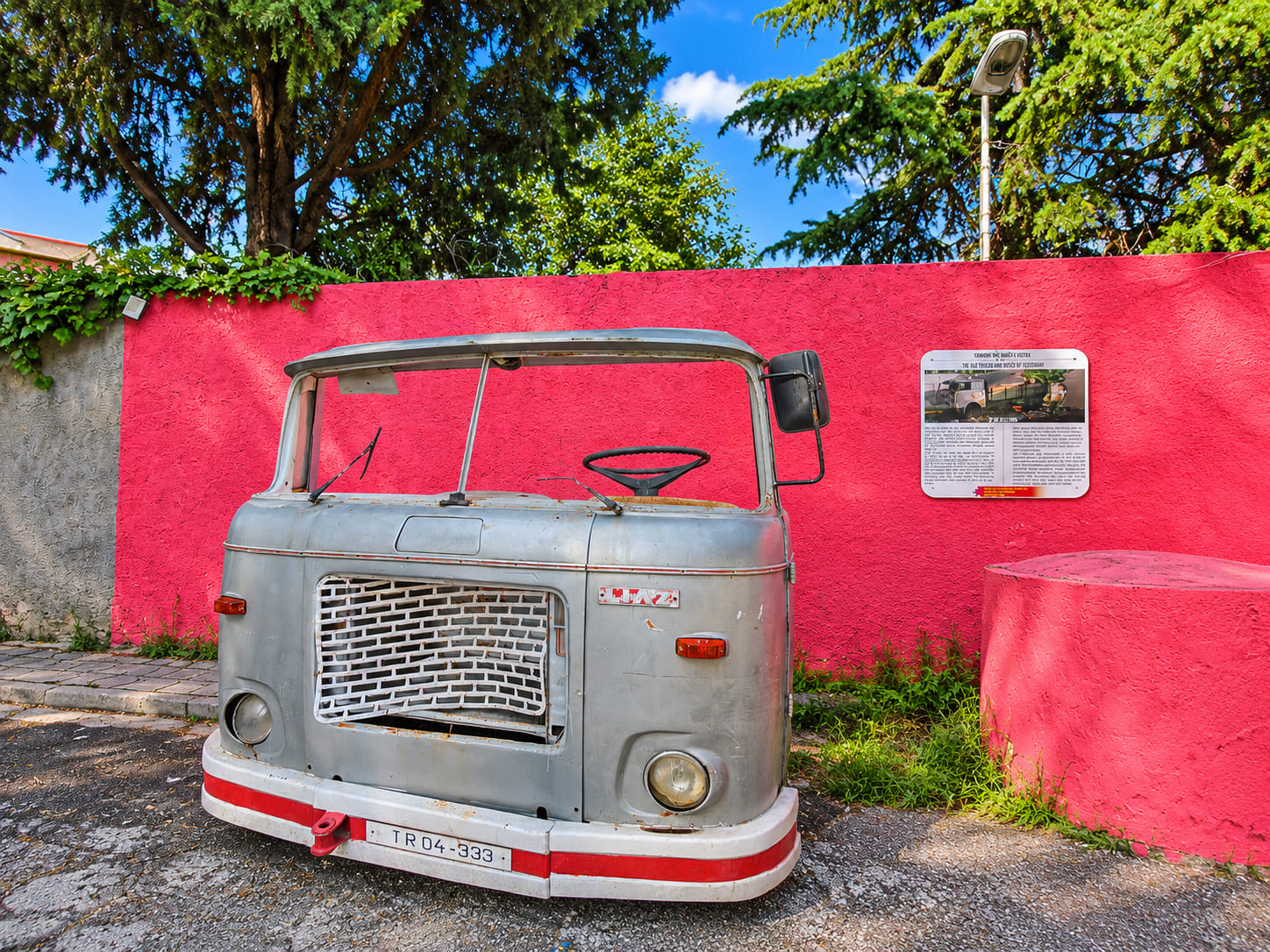
On 2 July 1990, a driver named Ylli Bodinaku rammed his truck into the back wall of the West German embassy in Tirana, with his wife and children in the cab. The hole he made let more than 3,000 Albanians pour into the embassy grounds to ask for asylum. Today a life-size outline of that truck, set into the embassy wall, marks the spot.
| Quick facts | |
|---|---|
| Where | Back wall of the German Embassy, in the embassy district west of the center (Google Maps) |
| Price | Free, viewed from the street |
| Time needed | 10 minutes |
The break-in started a wave. Within days, thousands of people had climbed into foreign embassies across the city, more than 3,000 into the German one alone, and after about ten days of negotiations they were allowed to leave the country by ferry and train. It was the first mass act of defiance against Albania’s communist regime, eight months after the Berlin Wall fell, and it helped bring the system down within the next year and a half.
In 2017, architects Gjergj Islami and Ana Pekmezi and artist Eljan Tanini installed The Wall (“Muri”): the shape of Bodinaku’s Czechoslovak LIAZ truck, pushed into the embassy wall exactly where he broke through. Bodinaku himself helped rebuild and paint the cab. A second monument, by Arben Rada, depicting the broken wall, was unveiled nearby in 2020.
There isn’t much to do here beyond looking and reading the story, and it’s an active embassy with security around it, so be respectful taking photos. It’s worth the detour if you’re interested in 1990–91 and Communist history, especially after visiting Bunk’Art 2 or the House of Leaves.