With 3 days in Tirana, spend one day in the city, ending at the Albanian Night show, then use Tirana as your base for two day trips: Krujë and Durrës on day two and the UNESCO town of Berat on day three. You’ll see Albania’s quirky, colorful capital, its national hero’s mountain fortress, a Roman amphitheater on the Adriatic and the “city of a thousand windows”, and you’ll sleep in the same bed every night.
Three days in Tirana, or a long weekend in Tirana, is exactly when this city clicks. On a first visit it can feel like a lot: honking traffic, painted apartment blocks, cafés spilling onto every pavement, mosques next to communist-era bunkers. Give it a little time and you realize that chaos is the charm. Tirana is a city that spent almost half a century cut off from the rest of the world and is now making up for lost time, loudly and joyfully.
It also happens to be the perfect base. Albania is a small country, the roads have improved enormously in the last decade, and nearly everything worth seeing in central Albania is within a couple of hours’ drive. Medieval castles, Ottoman old towns, Roman ruins, Adriatic beaches and vineyards are all day-trip distance away. That means no packing and unpacking, no hotel-hopping and no lugging suitcases over cobblestones. Just a strong coffee in the morning, a car or a tour, and back in time for a long dinner.
This itinerary is the one I’d give a friend visiting for the first time. It mixes the big-name sights with the small moments that make Albania so memorable: the smell of grilled meat drifting out of a castle-side restaurant, an old man selling felt slippers he made himself, the sun setting over the Adriatic from a 2,000-year-old city. Let’s get into it.
3 days in Tirana itinerary at a glance
| Plan | Travel time from Tirana | |
|---|---|---|
| Day 1 | Tirana highlights and Albanian Night | None, it’s all walkable |
| Day 2 | Krujë castle and bazaar, then Durrës | About 1 hour, then 1 hour |
| Day 3 | Berat, the city of a thousand windows | About 2 hours each way |
Day one is all on foot, so wear comfortable shoes. Days two and three involve some driving, but every leg is short enough that you’ll spend far more time exploring than sitting in a car. If you only have a weekend in Tirana, do day one plus whichever day trip appeals most (I’d pick Berat).
Day 1: Tirana’s greatest hits
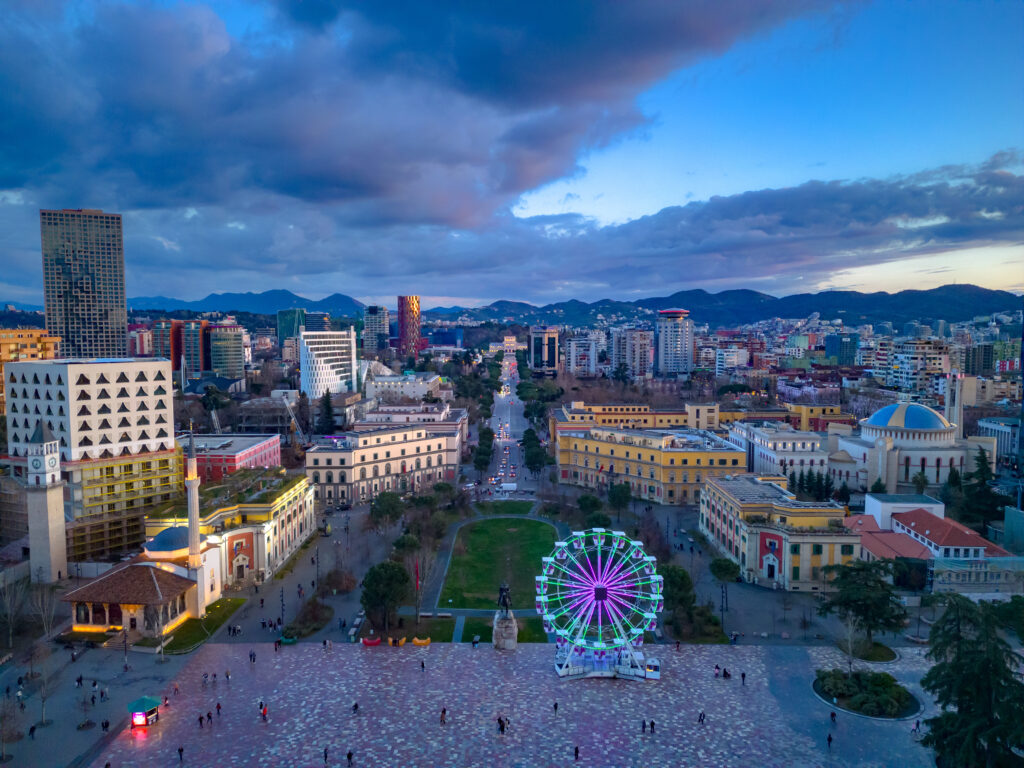
Your first day is about getting under the skin of the capital. Tirana’s main sights are packed into a compact, walkable center, and the route below flows naturally from one to the next. Along the way you’ll travel from the Ottoman era through the darkest decades of communism and out the other side into the bright, buzzing city Tirana is today. It’s a lot of history for one day, but it’s told in such vivid, unexpected ways that it never feels like homework.
Morning: Skanderbeg Square and the Et’hem Bej Mosque
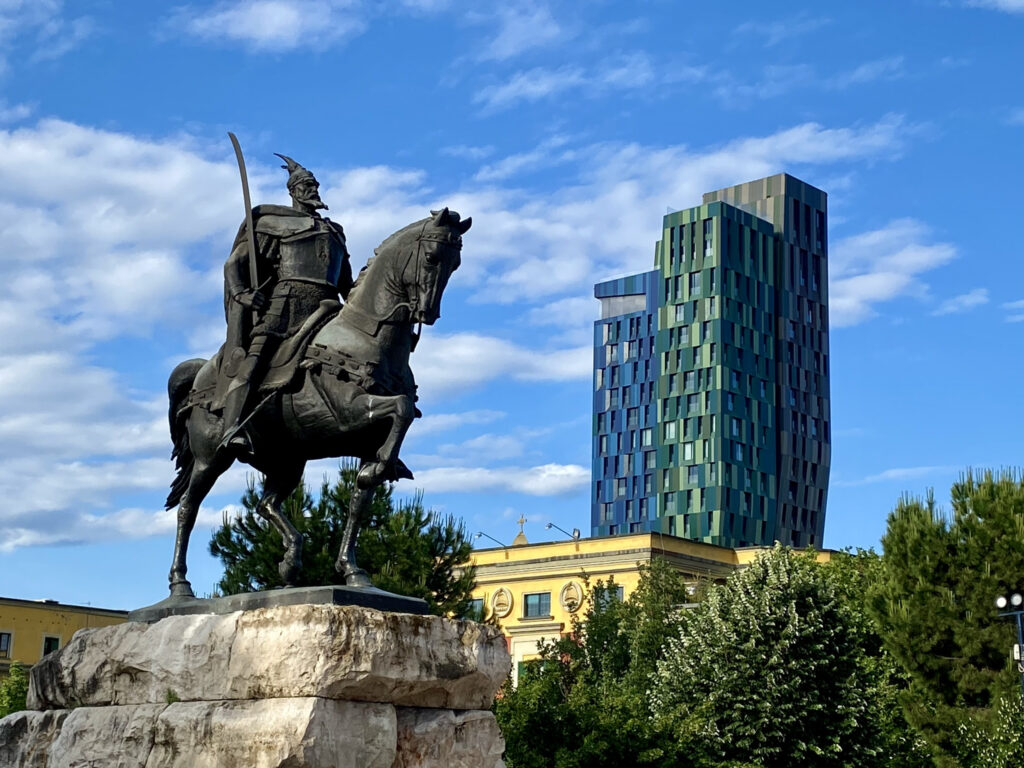
Start where every Tirana story starts: Skanderbeg Square. Grab a coffee at one of the cafés on the edge (Albanians take their coffee seriously, and a macchiato here is as good as anything in Italy) and take a moment to soak it in. The square is enormous, a vast open plaza that was pedestrianized and repaved with stones gathered from towns all over Albania, so in a sense you’re standing on the whole country at once. In the middle, the national hero Skanderbeg sits astride his horse, sword at his side, looking every bit the man who held off the Ottoman Empire for a quarter of a century. You’ll hear his name constantly over the next three days, so it’s nice to say hello early.
Around the edges, the square is a living timeline. The National History Museum’s huge socialist-realist mosaic stretches across its façade, showing Albanians from Illyrian warriors to partisan fighters striding heroically into the future. Opposite, the Palace of Culture and the Opera are pure communist-era monumentality. And tucked into the corner, looking almost delicate against all that concrete, is the Et’hem Bej Mosque with the Clock Tower beside it.
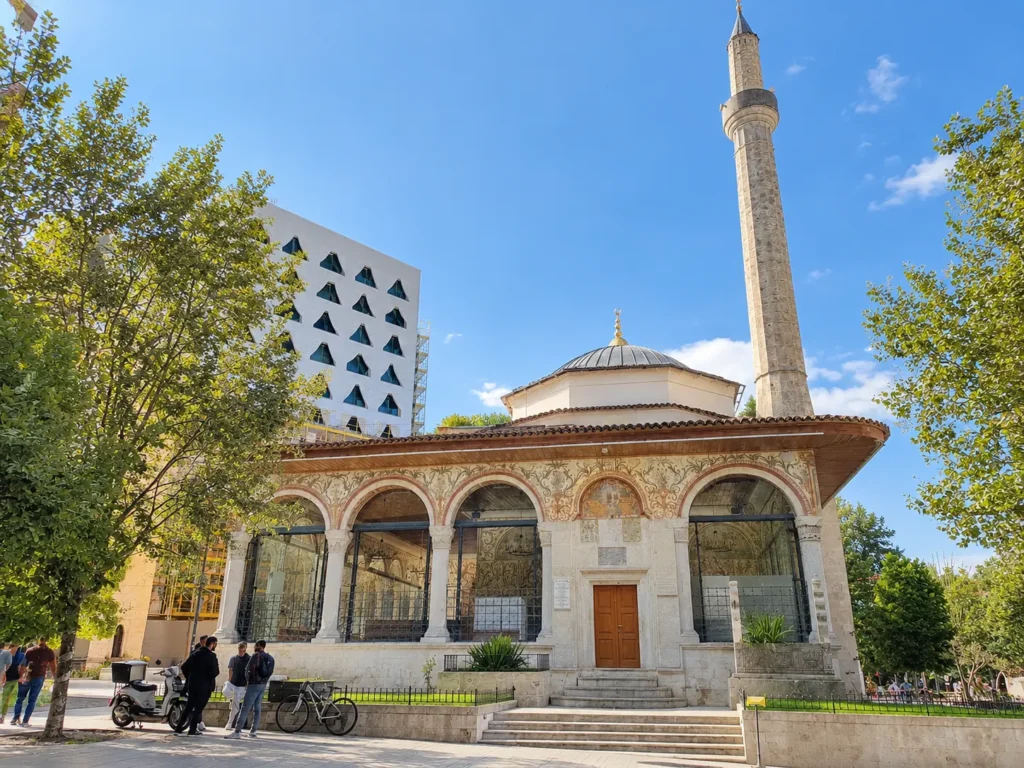
Step inside the mosque and you’ll understand why it’s one of the most beloved buildings in the city. Built in the late 18th and early 19th centuries, it’s small and intimate, and its walls are covered in frescoes of trees, waterfalls and bridges, landscapes that are rare in Islamic art and feel more like a painted garden than a place of worship. It also carries a powerful story: it survived the communist ban on religion, and in 1991, as the regime crumbled, thousands of people gathered here for prayers in defiance of the authorities. Standing under that painted dome, you can feel why this place matters so much to Tirana. Remember to dress modestly and take your shoes off at the door.
Bunk’Art 2: inside a communist nuclear bunker
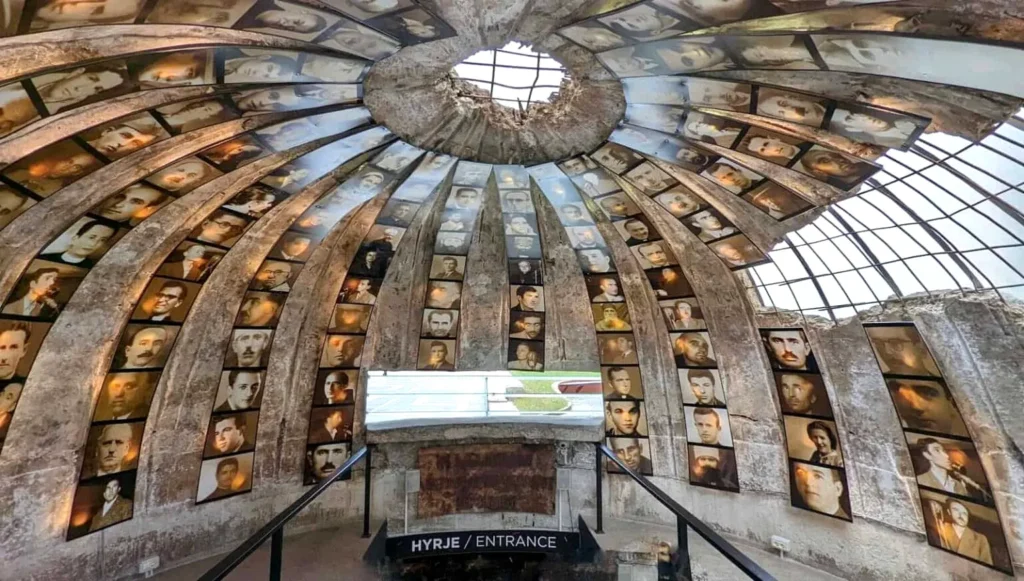
A couple of minutes’ walk from the square, a small concrete dome pokes out of the ground like a mushroom. That’s the entrance to Bunk’Art 2, a museum built inside an anti-nuclear bunker that was dug in the 1980s for the Ministry of Internal Affairs. Albania’s dictator Enver Hoxha was convinced the country would be invaded at any moment, and he had hundreds of thousands of bunkers built across the land. This is one of the biggest.
Walking down into its low, chilly corridors is a strange, slightly claustrophobic experience, and that’s exactly the point. Room by room, the museum tells the story of Albania’s police and secret police from 1912 to 1991, with uniforms, interrogation equipment, photographs and personal stories of people who were watched, imprisoned or worse. Some rooms are haunting, some are almost absurd, and together they give you a real sense of what living under one of the most isolated regimes in history felt like. You’ll come back up into the sunshine feeling a little more thoughtful, and with a new appreciation for the noisy, free city around you.
House of Leaves: the museum of secret surveillance
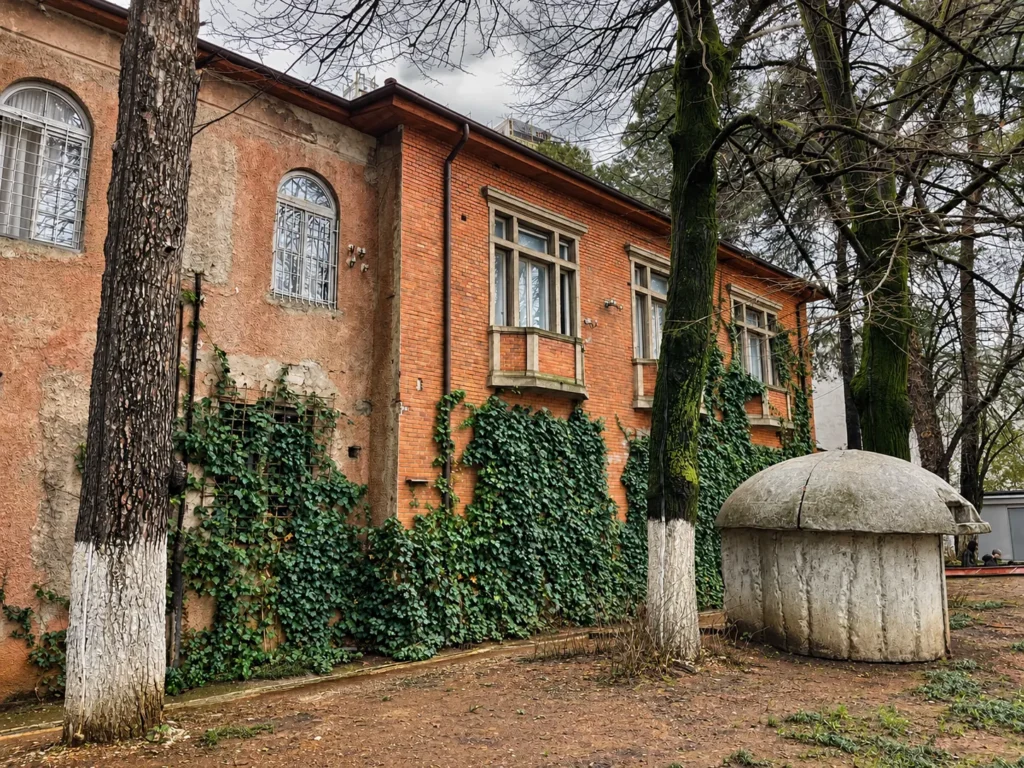
From Bunk’Art 2, walk about ten minutes to the House of Leaves, and if you only visit one museum in Albania, make it this one. The ivy-covered villa, which gives the museum its name, started life as a doctor’s clinic before becoming the headquarters of the Sigurimi, the communist secret police, where they planned and carried out surveillance on ordinary citizens. It won the Council of Europe Museum Prize in 2020, and once you’re inside you’ll see why.
The exhibits are incredibly well done: hidden cameras disguised in everyday objects, reel-to-reel recorders, wiretapping rooms, and files on people whose only “crime” was a joke told to the wrong friend. Headphones let you listen in on recorded conversations, and the effect is genuinely unsettling, as if you’ve become the one doing the spying. It’s a sobering hour, but an essential one. Everything else you see in Albania, from the bunkers on the hills to the explosion of color on Tirana’s buildings, makes more sense once you’ve been here.
Lunch near the square
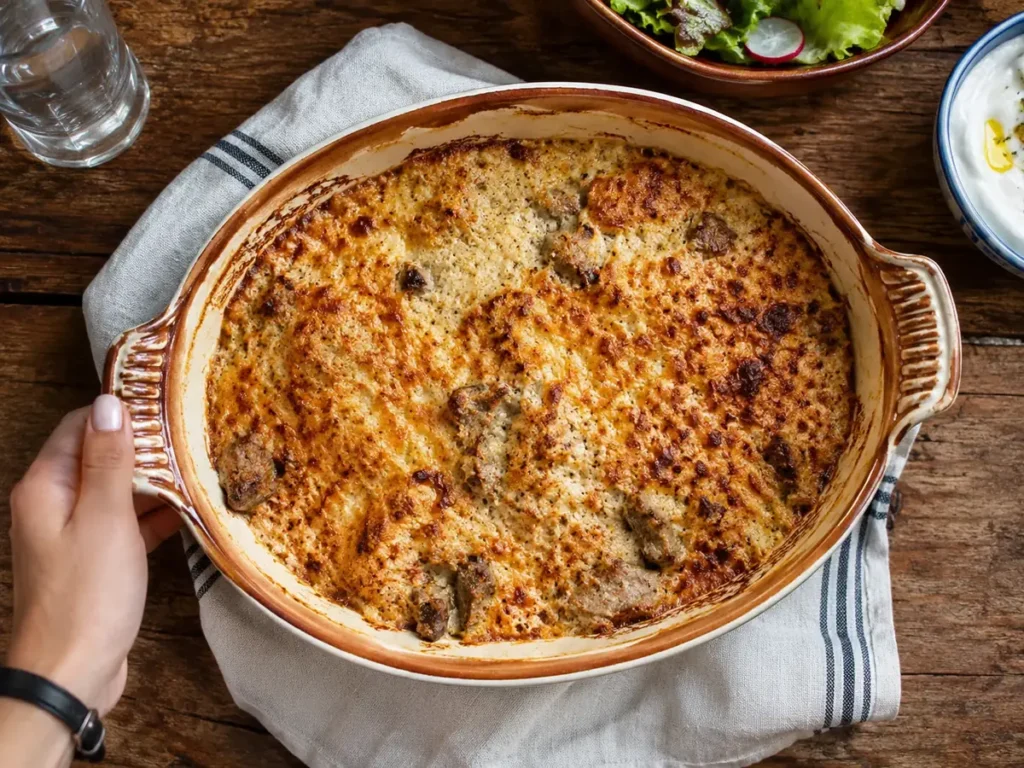
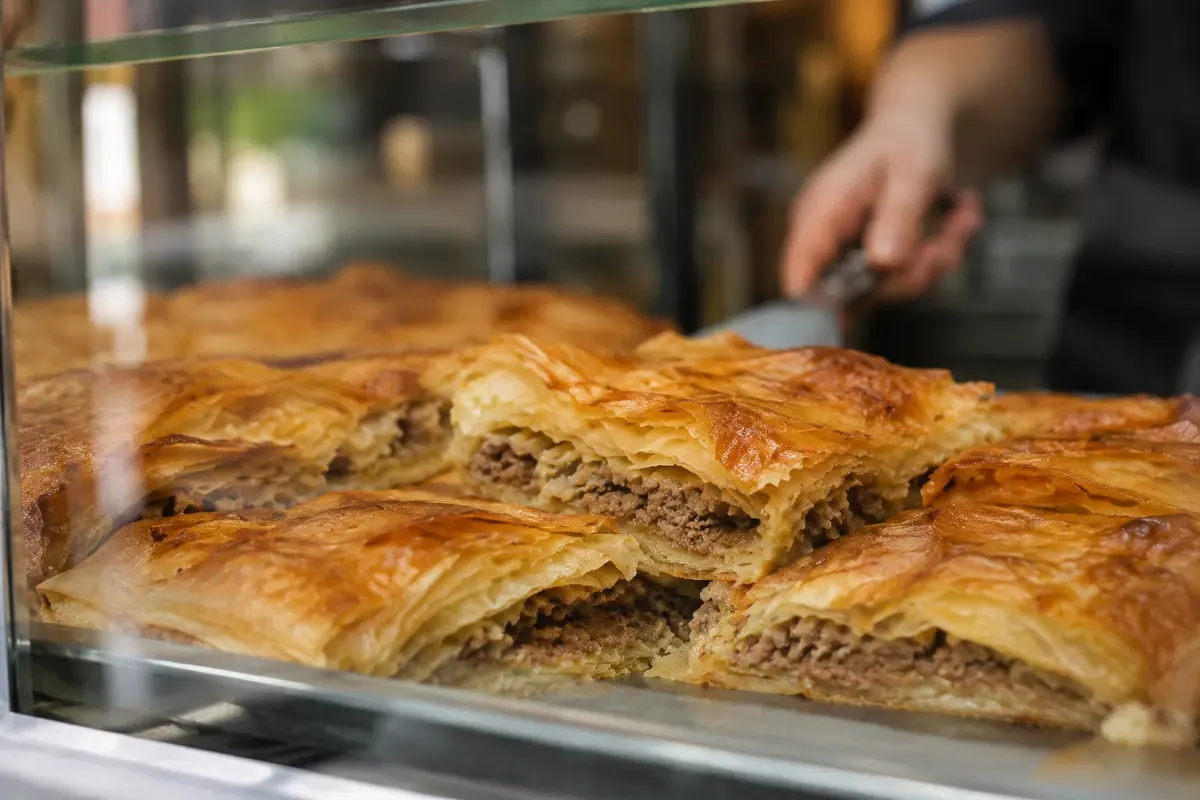
By now you’ll be hungry, and you’re in luck, because Albanian food is one of the great underrated cuisines of Europe. Tymi, right by the square, is a reliable choice for grilled meats, warm bread and big salads, or pick anywhere from our traditional restaurants list. Order a few dishes to share: tavë kosi (baked lamb in yogurt), fërgesë (a rich, bubbling dish of peppers, tomatoes and cottage cheese), byrek and plenty of fresh bread. Don’t rush it. Long, lazy lunches are a big part of life here.
Afternoon: climb the Pyramid of Tirana
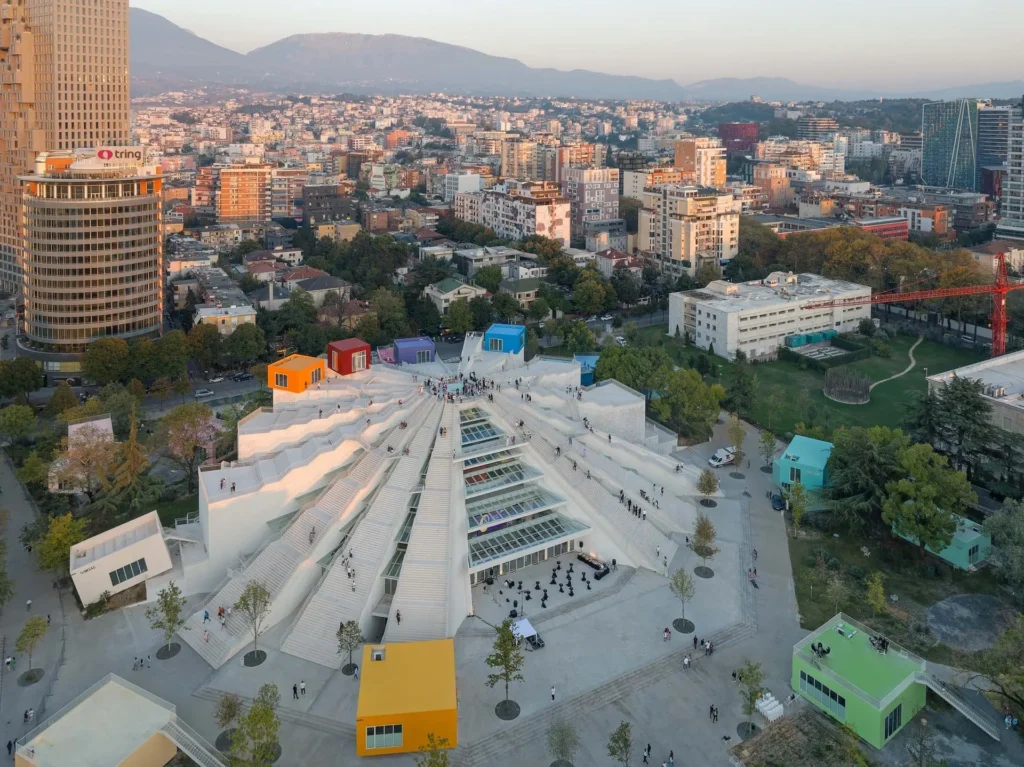
Walk off lunch along the main boulevard to the Pyramid of Tirana, one of the city’s most bizarre and wonderful buildings. It was built in 1988 as a museum to Enver Hoxha, and after the regime fell it went through a whole series of lives: conference center, NATO base during the Kosovo war, nightclub, and for years an abandoned ruin that local kids used as a giant slide. Today it has been brilliantly reborn as a tech and education hub, with colorful boxes scattered around its base and steps running all the way up its sloping sides.
Climb to the top. It’s steeper than it looks, but the view across the rooftops toward Mount Dajti is worth every step. Up there, with students chatting on the steps and the city humming below, the Pyramid feels like the perfect symbol of modern Tirana: a monument to a dictator, turned into a playground for the next generation.
Blloku: from forbidden zone to the city’s coolest neighborhood
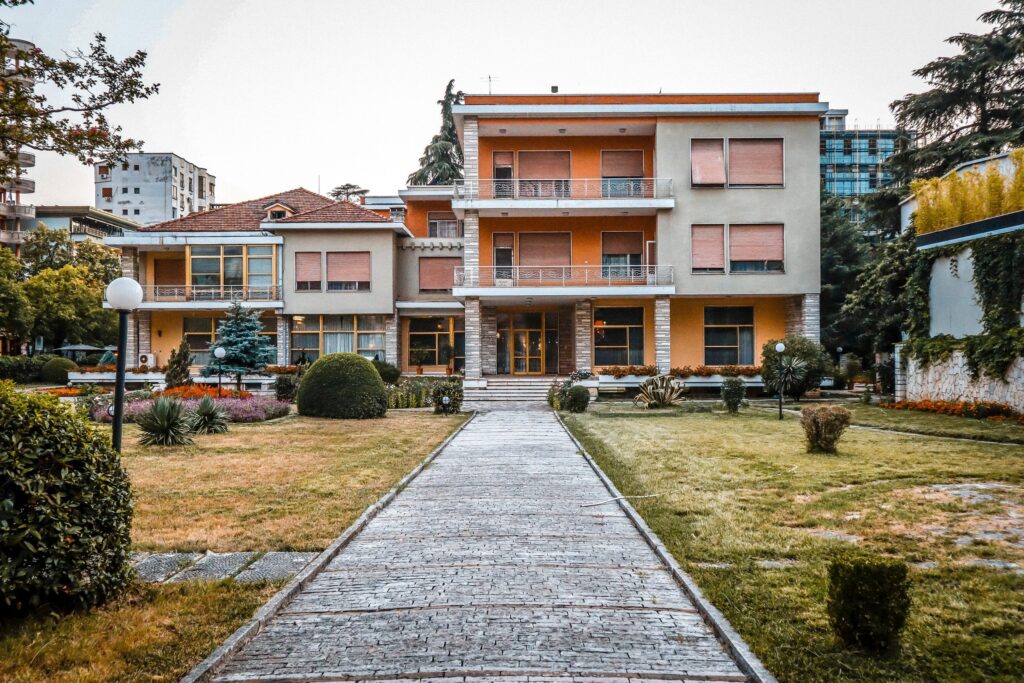
Just across the river is Blloku, and the contrast is wonderful. Under communism, this leafy grid of streets was sealed off for the party elite, and ordinary Albanians weren’t allowed in. Hoxha’s own villa still stands on the corner, oddly modest for a dictator’s home. When the regime collapsed, the neighborhood was thrown open, and it has been making up for it ever since.
Today Blloku is where Tirana comes to see and be seen: rooftop bars, concept stores, specialty coffee, cocktail lounges and restaurants with terraces full of young Albanians dressed to the nines. Wander without a plan, stop for a coffee or a fresh juice, and take a look at the Postbllok memorial on the edge of the neighborhood, where a bunker, a section of the Berlin Wall and concrete pillars from a labor camp stand together as a reminder of what came before.
Late afternoon: a slow loop of the Grand Park
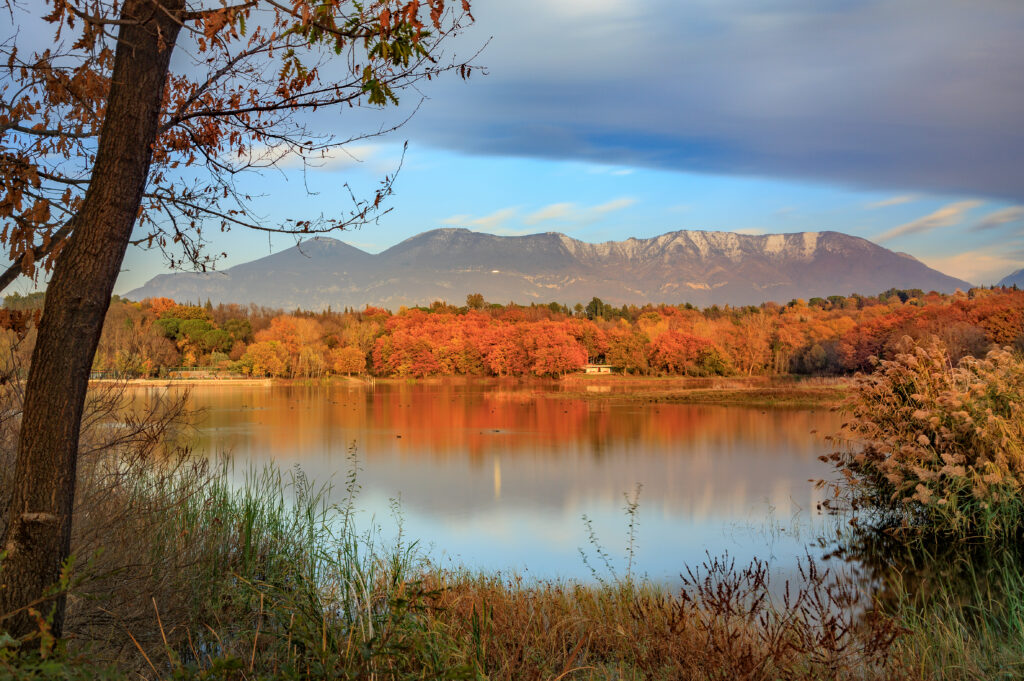
Finish your sightseeing with a stroll through the Grand Park, which starts just behind Blloku. This is where Tirana goes to breathe: an artificial lake fringed by pine trees, joggers and dog-walkers, families with strollers, couples on benches and old men playing dominoes in the shade. The full loop around the lake takes about an hour at an easy pace, and in the golden late-afternoon light it’s one of the most peaceful places in the city. Grab an ice cream or a drink at one of the lakeside cafés, then head back to your hotel to freshen up for the evening.
19:00 · Albanian Night
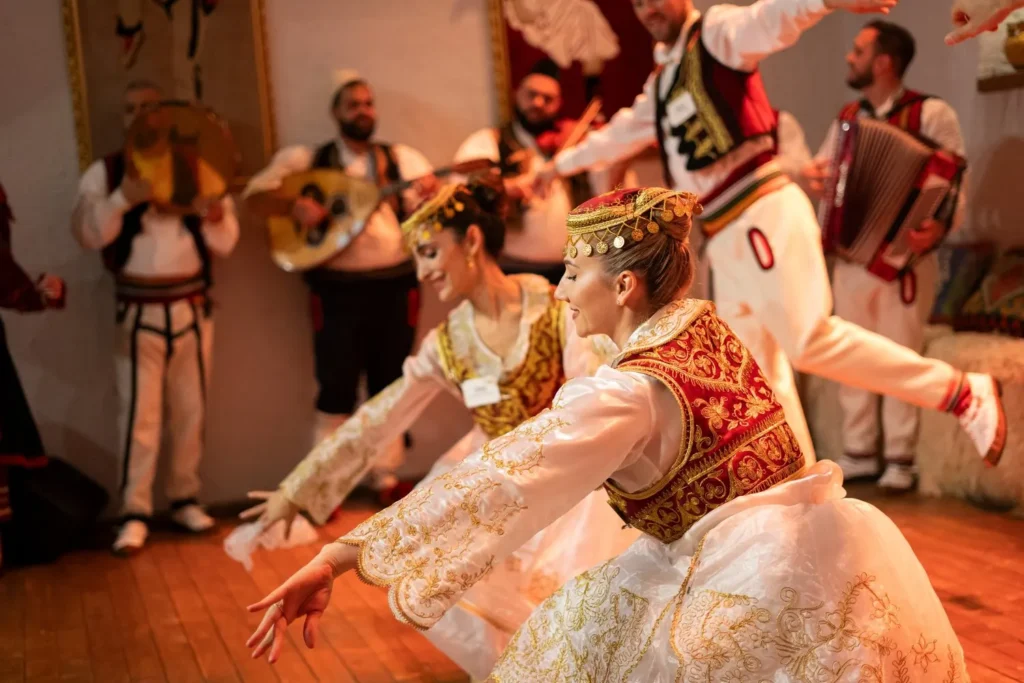
Your first night should be at Albanian Night. It’s a live show in the center of Tirana where you’re a guest at a traditional village wedding from the north of Albania, and it’s the best possible way to end your first day. There’s folk singing that sends shivers down your spine, energetic dancing you’ll be pulled into whether you planned to or not, traditional costumes you can try on, and plenty of raki to toast the bride and groom.
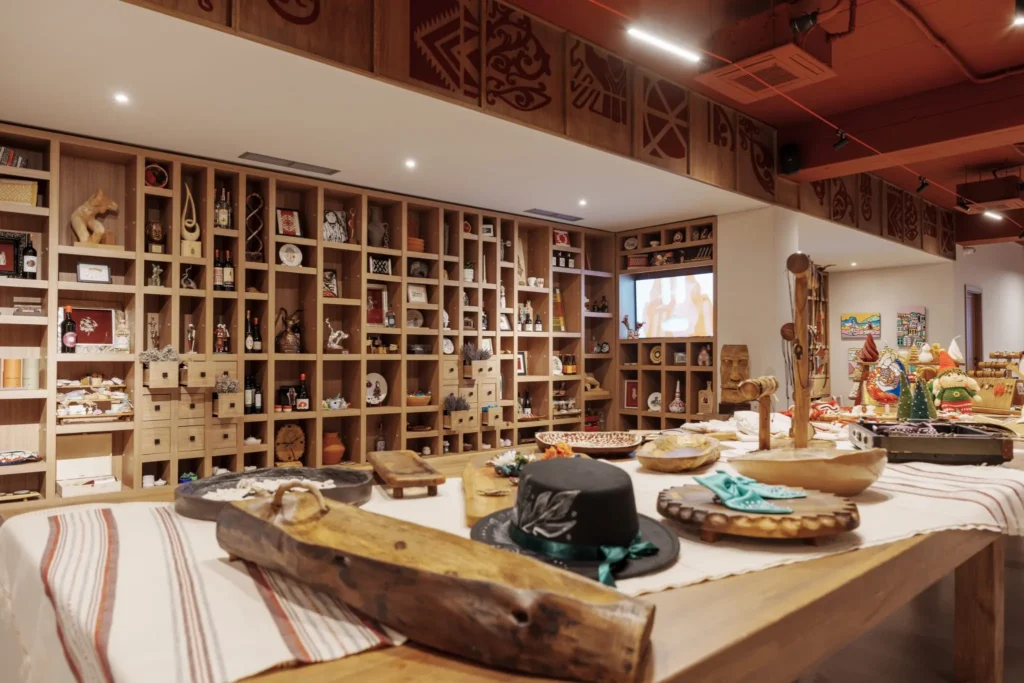
It’s silly and moving at the same time, and the atmosphere is warm in the way only an Albanian celebration can be. It also gives you real context for the places you’ll visit over the next two days: the music, the costumes and the stories all tie back to the mountains and villages you’ll see from the car window (and yes, Skanderbeg will come up again). Book the Dinner & Show for a big traditional meal afterwards, and leave time to browse the bazaar of handmade crafts, which is a great place to pick up a meaningful souvenir. Shows start at 19:00 every evening; book on albaniannight.com.
Day 2 morning: Krujë, Skanderbeg’s mountain fortress
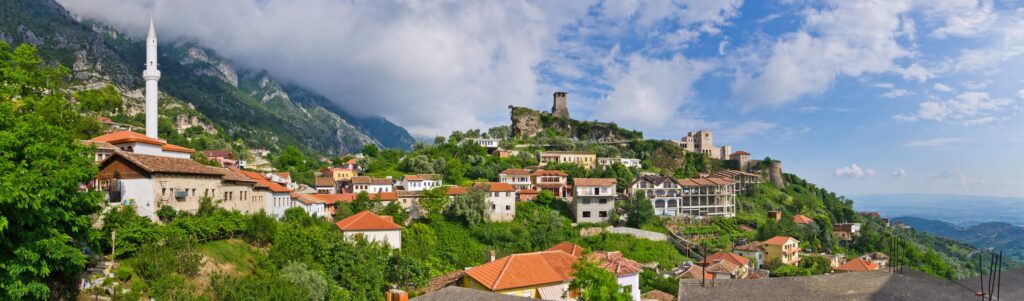
On day two you head north into the mountains. Krujë sits on a rocky ledge about 45 minutes to an hour from Tirana, and the drive alone is part of the fun: the flat plains give way to olive groves, then the road starts to switchback up the mountainside and suddenly the whole coastal plain is spread out beneath you, with the Adriatic glinting on the horizon on a clear day.
This is the town where Skanderbeg made his stand. In the 1400s, he held off the Ottoman armies from this fortress for 25 years, surviving siege after siege when far larger kingdoms had already fallen. For Albanians, Krujë isn’t just a castle, it’s the heart of the national story, and you can feel that pride the moment you arrive.
The castle and the Skanderbeg Museum
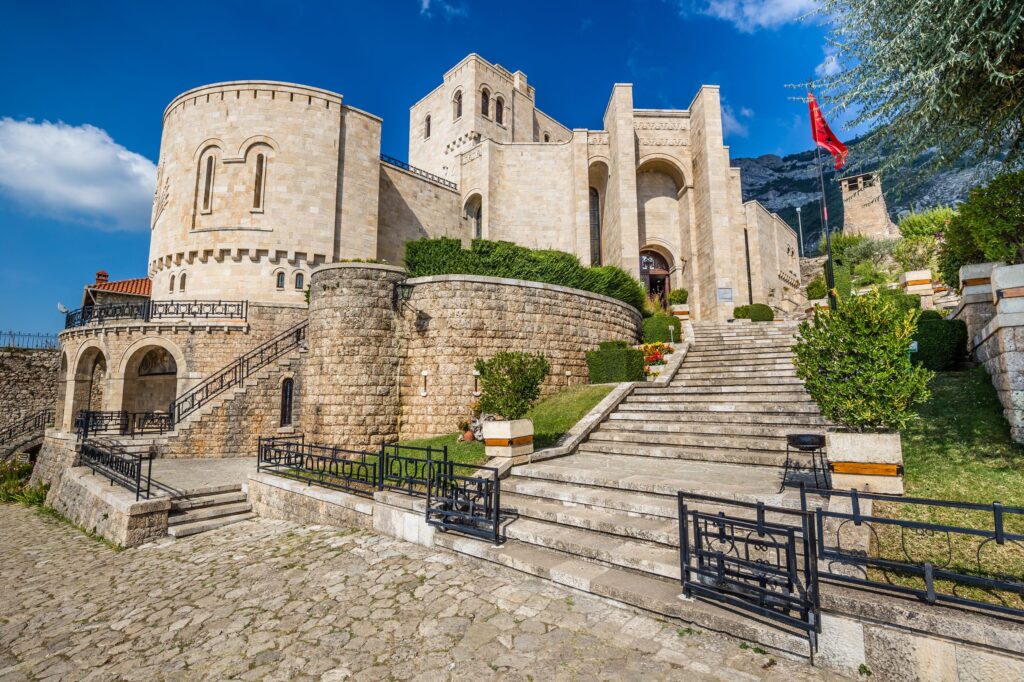
Walk up through the castle gate and the first thing that hits you is the view. The castle walls cling to the edge of the mountain, and from the ramparts you can look straight down the cliffs to the valley far below. It’s easy to imagine Skanderbeg’s lookouts standing here, watching for the dust of an approaching army.
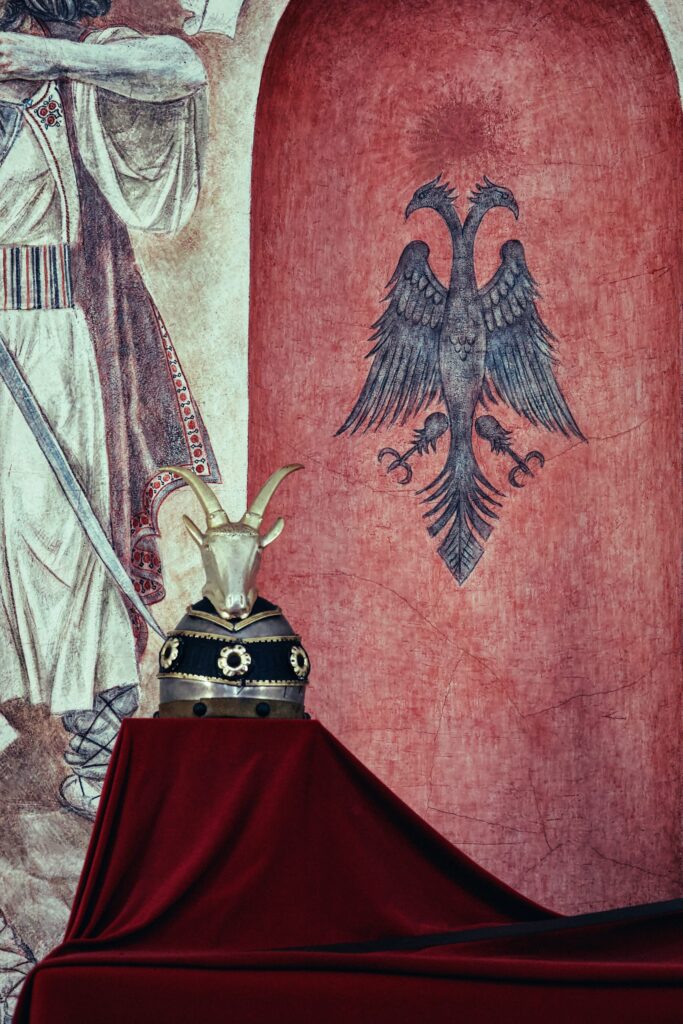
Inside the walls is the Skanderbeg Museum, a dramatic building designed to look like a medieval fortress, opened in 1982. The exhibits walk you through his life and battles with huge paintings, weapons, maps and a replica of his famous helmet, topped with a goat’s head (the original is in Vienna). Even if you’re not normally a fan of military history, the scale of the story is gripping, and you’ll come away understanding why his statue stands in the middle of Tirana and why his double-headed eagle flies on the national flag.
The Ethnographic Museum
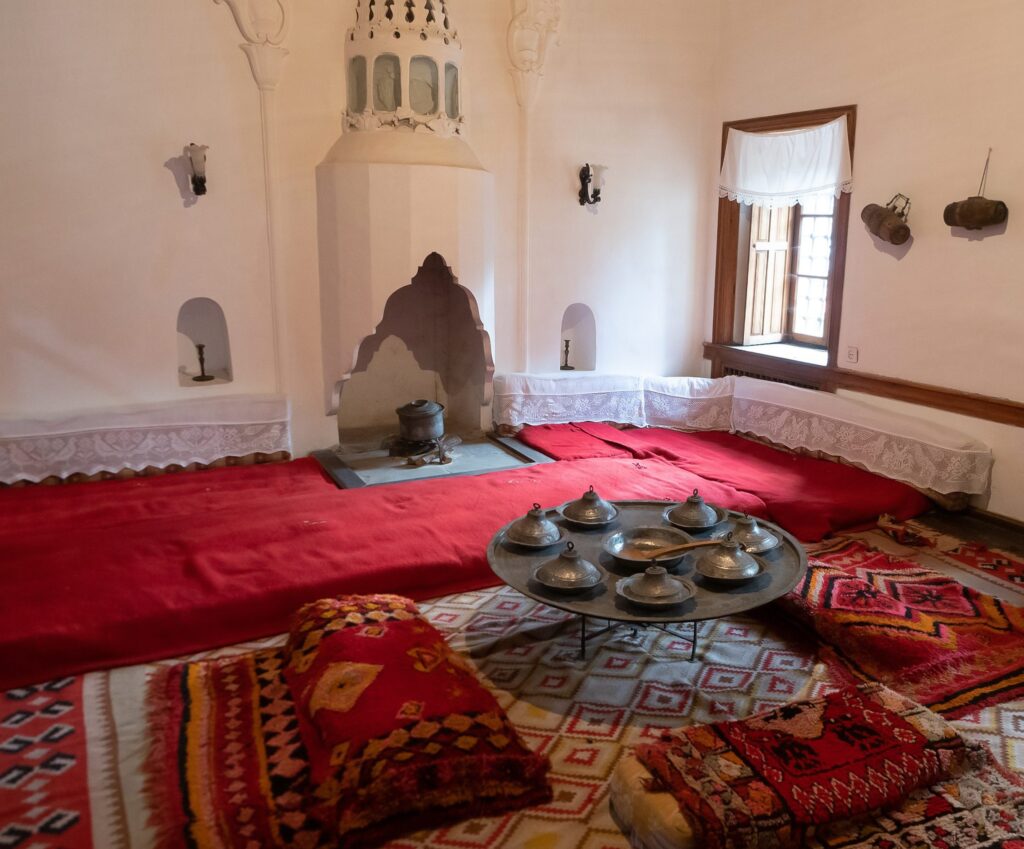
Just a short walk away, through the cobbled lanes inside the walls, is the Ethnographic Museum, and for many visitors it ends up being the highlight. It’s set in an old Ottoman family house from the 18th century, preserved almost exactly as the family lived in it. You’ll see the original wooden furniture and carved ceilings, the rooms where guests were received, a private hammam, and the tools the family used to make nearly everything themselves: olive presses, looms, leather workshops and copper pots.
The guides here are wonderful storytellers, and they’ll show you clever little details like the hidden windows the women of the house used to watch guests without being seen. It feels less like a museum and more like being invited into someone’s home, two and a half centuries ago. While you’re inside the castle walls, look out for the small Dollma Teqe, a Bektashi shrine that’s a quiet reminder of Albania’s unusual and tolerant religious mix.
The Old Bazaar
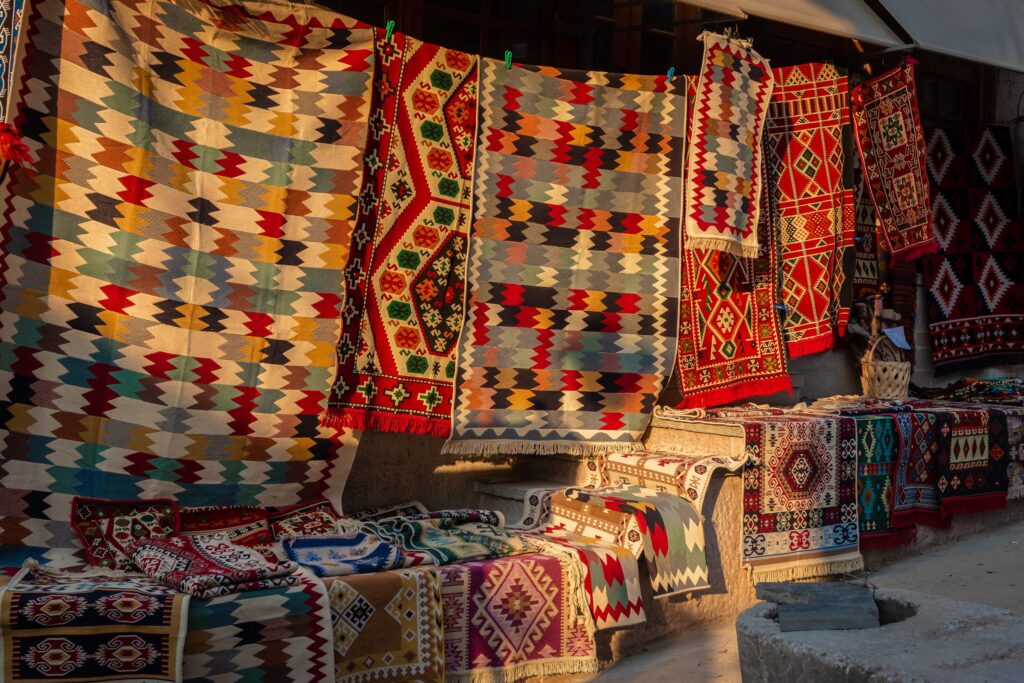
The real fun, though, is the Old Bazaar just below the castle. It’s a steep, cobbled lane lined with wooden-fronted shops with overhanging roofs, and it has been a market street since Ottoman times. Today it’s packed with treasures: hand-woven rugs and kilims, felt slippers and the traditional white qeleshe caps, copperware, silver filigree jewelry, embroidered textiles, and antiques ranging from communist-era badges to old coffee grinders.
Some of what you see is mass-produced, so take your time. Look for the workshops where you can watch things being made by hand, chat with the shopkeepers (many are happy to tell you about their craft) and don’t be afraid to haggle a little, with a smile. This is one of the best places in the country to buy a souvenir you’ll actually treasure.
Lunch with a view at Restorant Bardhi
For lunch, Restorant Bardhi near the castle is a local institution. Portions are generous, a lot of the produce comes from their own farm, and the view over the hills from the terrace is one you’ll want to photograph a dozen times. Try the slow-cooked lamb, the local cheeses and the fresh vegetables, and wash it down with homemade raki if you’re not driving. Insider tip: Krujë is only about 30 minutes from Tirana airport, so if you’d rather not squeeze it into day two, it makes a great last stop on your way out of the country.
Day 2 afternoon: Durrës and the Adriatic
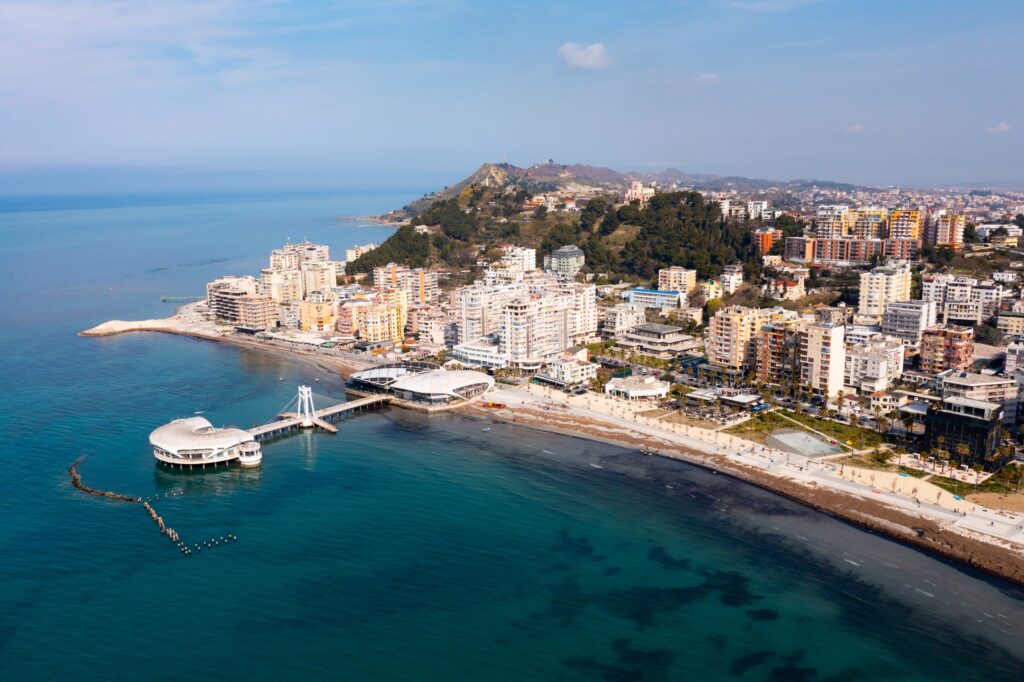
From Krujë, drive down out of the mountains toward the sea. Durrës is Albania’s oldest city and its main port, about 40 minutes from Tirana, and it has been welcoming travelers for more than 2,500 years. It was founded by Greek colonists, became the Roman city of Dyrrachium, and was the starting point of the Via Egnatia, the great Roman road that ran all the way to Constantinople. Today it’s a busy, sunny seaside city, and the ancient past keeps popping up in unexpected places between the apartment blocks and beach bars.
The Roman Amphitheater
The most astonishing example is right in the middle of town. Half-hidden between modern buildings is a Roman amphitheater from the 2nd century AD that once held around 15,000 spectators, one of the largest in the Balkans. Incredibly, it was forgotten for centuries, built over by houses, and only rediscovered in the 1960s. Some of those houses still sit on top of it today.
Walk through the vaulted stone corridors where gladiators and spectators once passed, and look for the small early Christian chapel built into the structure, with fragments of mosaics still clinging to the walls. Then step out into the arena itself and look up at the tiers of seats rising around you. With laundry fluttering on the balconies above and the noise of the city drifting in, it’s a wonderfully surreal place, ancient Rome and everyday Albania in one frame.
The Venetian Tower and the seafront promenade
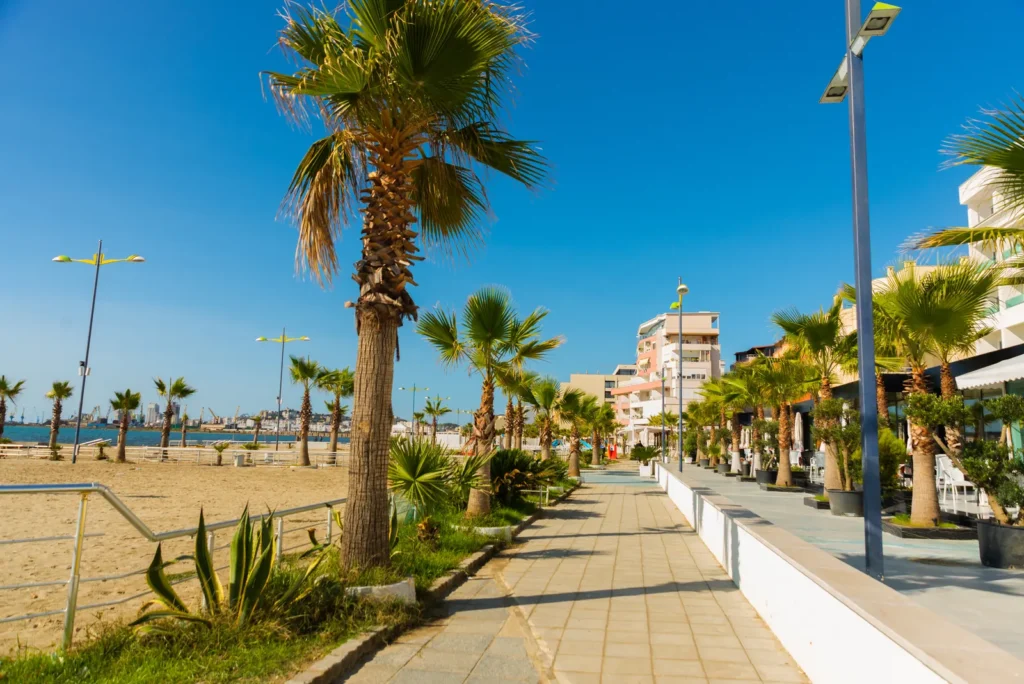
From the amphitheater it’s a short walk down to the Venetian Tower, a stout, round 15th-century tower that was part of the city’s medieval defenses. Then stroll along the long seafront promenade, lined with palm trees, cafés and benches, as the locals do every evening. You’ll pass fishermen, families with ice cream and the Archaeological Museum, which is worth a quick visit if you want to see more of what Roman Dyrrachium left behind.
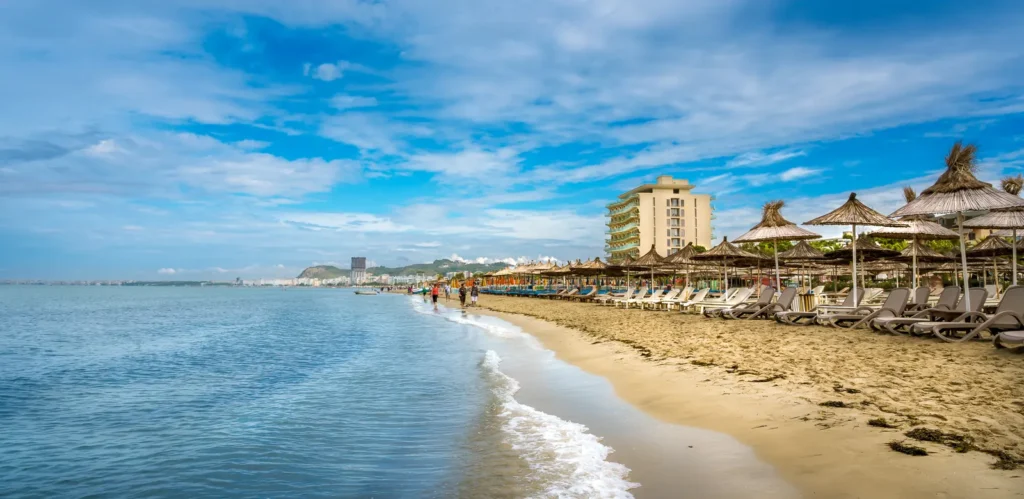
If it’s summer, bring a swimsuit. The city beach is right there, and the shallow, warm Adriatic water is incredibly inviting after a morning in the mountains. For a quieter, cleaner stretch of sand, Qerret Beach near Golem is about 20 minutes south, with a long, gently sloping beach, shaded parking in a pine forest, lifeguards and showers.
Seafood in Durrës
Durrës is all about seafood, and eating it while looking at the sea where it was caught is one of the great pleasures of Albania. Fish House is a local favorite for grilled octopus, red mullet and seafood linguine at very fair prices. Order a carafe of local white wine, take your time, and watch the boats coming and going from the port.
Got a car and more time? The Cape of Rodon
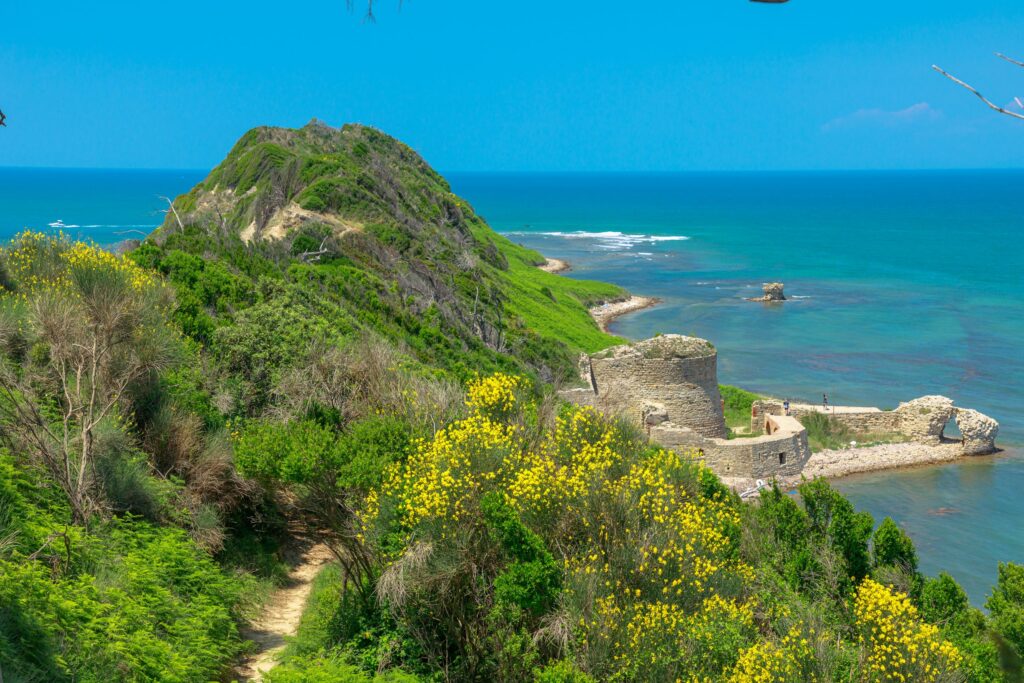
If you have your own wheels and a few extra hours, drive north to the Cape of Rodon, and prepare to fall in love. It’s a wild, rocky peninsula pushing out into the Adriatic, and at its tip you’ll find the ruins of a castle that Skanderbeg began building in 1450, right after the first siege of Krujë. Its weathered walls drop straight into the sea, waves crashing against the stones.
Nearby, the little Church of St. Anthony sits alone on the shore, whitewashed and impossibly photogenic, with frescoes inside that include a figure believed to be Skanderbeg’s sister, Mamica. Walking along the cliffs here, with nothing but the wind, the sea and the ruins around you, is one of the most peaceful, soul-filling experiences on this whole trip. On the way back, family-run seafood places along the coast serve a full meal with wine for a lot less than you’d pay in the city, and the Duka Winery in the Ishmi hills is a lovely detour if you fancy a tasting.
Krujë and Durrës make an easy loop: Tirana to Krujë in the morning, down to the coast for a late lunch and the amphitheater, and back to Tirana in about 40 minutes. Be back by 20:00 for a lazy dinner, or a cocktail in Blloku if you still have the energy.
Day 3: Berat, the city of a thousand windows
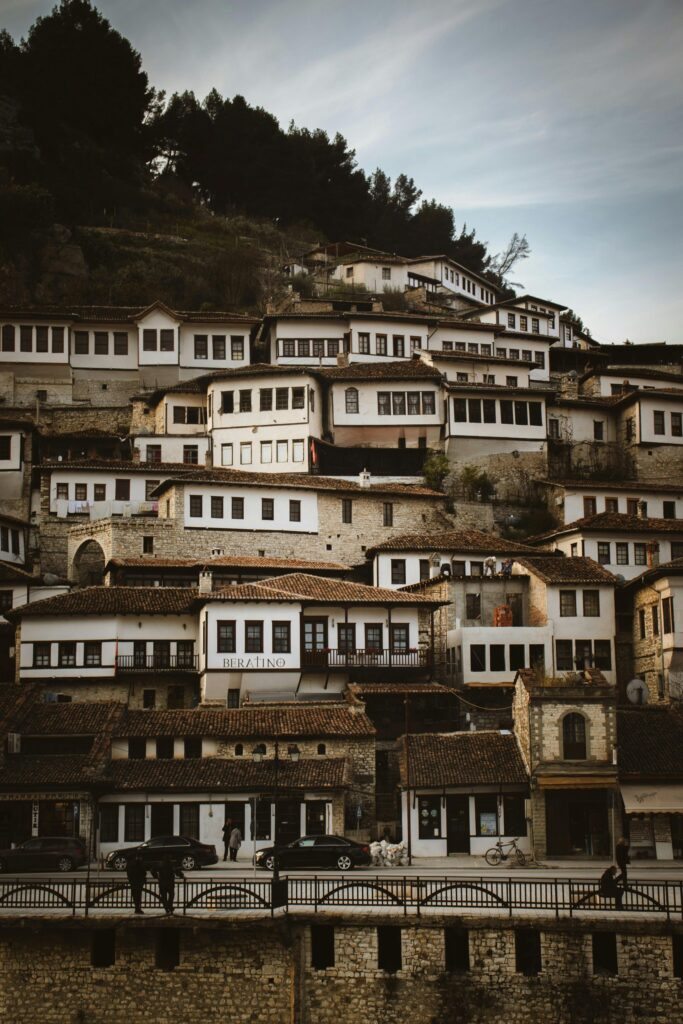
Save the best for last. Berat is just under two hours south of Tirana by car (two to two and a half hours by bus) and it’s the day trip I recommend to everyone, without exception. They call it the “city of a thousand windows” because of the white Ottoman houses stacked up the hillside in the old Mangalem quarter, their rows of dark wooden windows all staring across the Osumi River at their neighbors in Gorica. The old town is a UNESCO World Heritage Site, and it’s one of those rare places that looks every bit as magical in real life as it does in photos.
Leave Tirana by 8:30 so you have the whole day. The drive itself is a treat: once you leave the city behind, the road winds through rolling green countryside that’s often compared to Tuscany, with vineyards, olive groves and small villages along the way. Then you round a bend, the mountain of Tomorr rises up in the distance, and there it is, Berat glowing white on the hillside beneath its castle.
Mangalem, Gorica and the classic view
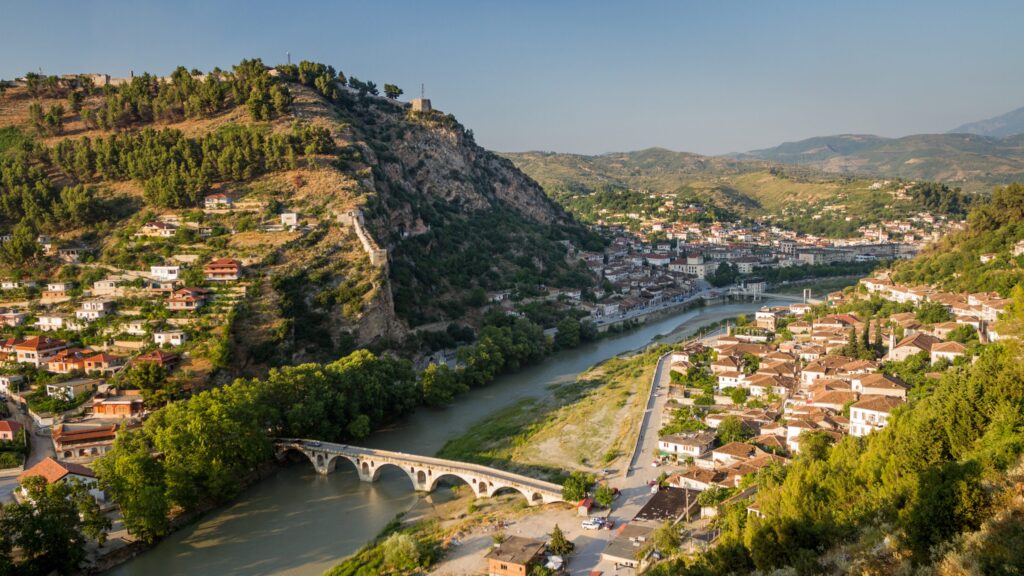
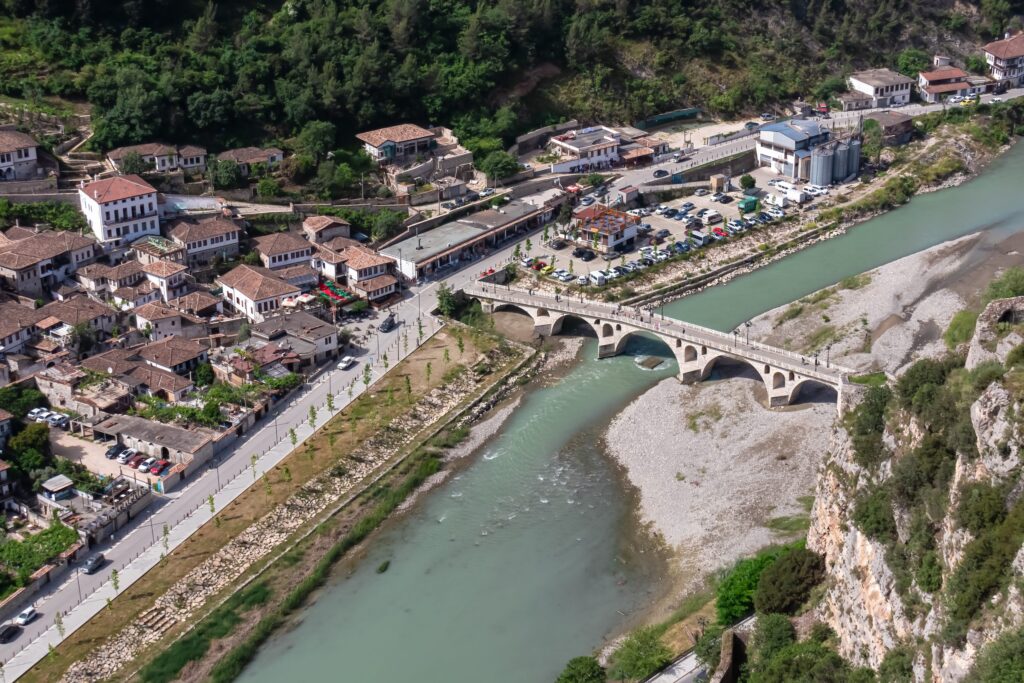
Start down by the river in Mangalem, the Ottoman quarter at the foot of the castle hill. Wander its narrow, steep lanes, where whitewashed houses lean against each other and grapevines hang over the doorways. Then walk across the stone Gorica Bridge, an elegant seven-arched Ottoman bridge about 130 meters long, to the Gorica quarter on the other bank.
Gorica is quieter, with cobblestone streets and small Orthodox churches tucked between the houses, and it’s from here that you get the classic view: Mangalem’s windows rising in tiers up the hillside opposite, reflected in the river, with the castle walls crowning the top. Find a spot along the riverbank, sit for a few minutes and just take it in. It’s the kind of view that makes you feel quietly grateful to be there.
Berat Castle: a citadel people still call home
Now climb up to Berat Castle (Kalaja). The walk up the steep cobbled street from Mangalem takes about 20 minutes and gets the heart pumping, so if it’s hot, there’s no shame in hopping in a taxi. The castle mostly dates to the 13th century, built on Roman and Byzantine foundations, and from the walls the views over the Osumi River and its canyon are breathtaking.
The most surprising thing about Berat Castle is that it’s not a ruin, it’s a neighborhood. People still live inside the walls, so you’ll be wandering past laundry lines, vegetable gardens, grandmothers knitting on doorsteps and stalls selling handmade lace and carpets, all in between Byzantine churches that are hundreds of years old. There’s a sense of timelessness here that’s hard to put into words. You half expect to turn a corner and step into the 1400s.
Don’t miss the Onufri Iconographic Museum inside the Church of the Dormition. It holds more than 200 icons and religious works, the most famous by the 16th-century master painter Onufri, renowned for a shade of red so rich and luminous that nobody has managed to copy it since. Stand in front of his work and you’ll see exactly what the fuss is about. Also look out for the Church of St. Theodore, with murals by Onufri, the ruins of the Red Mosque with its rare cylindrical minaret, and the little Holy Trinity Church perched on the slope, one of the prettiest Byzantine churches in Albania.
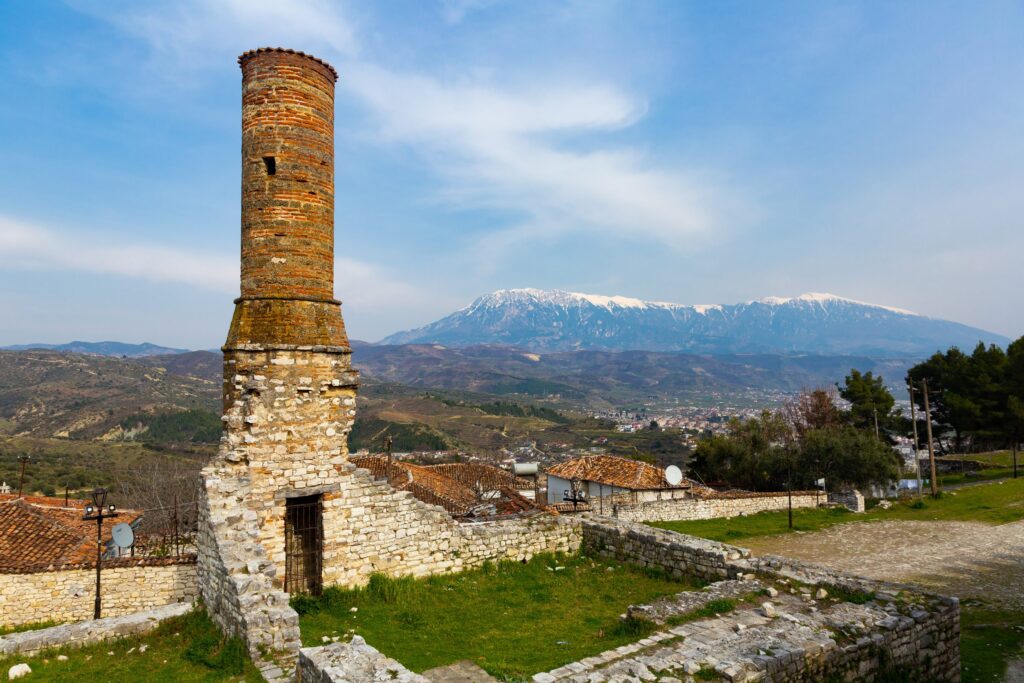
Back down in the lower town
On your way back down, take a look at the Sultan’s Mosque, one of the oldest in the city, built at the end of the 15th century with a beautifully painted ceiling and a gallery on wooden columns. Nearby, the Solomon Museum tells a moving and little-known story: how Albanians, including the people of Berat, sheltered Jews during the Second World War, when Albania ended the war with more Jews than it started with. It’s a small museum, but it leaves a big impression.
Where to eat in Berat
For lunch, Guva Mangalem has a terrace overlooking the river and lovely home cooking (it opens at 13:00). Other great options are Klea, a small family-run spot right next to the castle known for local cheeses, qofte (meatballs) and stuffed vine leaves, and Antigoni by the Gorica Bridge, with river views and fantastic stuffed eggplant. Berat’s food is a delicious mix of Ottoman and Albanian traditions: slow-cooked meats, fresh dairy and vegetables grown just down the road.
If you fall under Berat’s spell and decide to stay the night (many people do), book dinner at Homemade Food Lili, a tiny family restaurant with just a handful of tables in a garden in Mangalem. The host pours homemade raki and wine made by his own family, and it’s fully booked weeks ahead for very good reason. And as the evening cools, join the locals for the xhiro, the evening stroll along the main boulevard, as the windows of Mangalem light up one by one above you.
Wine on the way home
On the way back to Tirana, the road passes through the vineyards around Berat, which has been making wine for centuries. If you’ve got a designated driver, stopping for a tasting at one of the family wineries in the area is a lovely way to break up the drive and toast the end of your three days. Pick up a bottle of local red to take home. It’s the best souvenir there is.
Swap in: a day trip to Ohrid, North Macedonia
Yes, it’s a different country, and yes, it’s worth it. Lake Ohrid straddles the border between Albania and North Macedonia, and it’s one of the oldest and deepest lakes in Europe. The town of Ohrid, on the Macedonian side, is one of the most beautiful places in the Balkans: a hillside old town of red-roofed houses, Byzantine churches and cobbled lanes tumbling down to a lake so clear you can see the stones on the bottom. The town and lake are a UNESCO World Heritage Site.
It’s roughly three hours each way by car via the Qafë Thanë border crossing, so leave early (by 7:00) and bring your passport. If you’re in a rental car, check it has insurance for North Macedonia (the “green card”) before you go, or book a day tour and let someone else deal with the border. The drive along the Albanian shore of the lake, past Pogradec, is gorgeous in its own right.
Once you’re there, walk up to Samuel’s Fortress for sweeping views over the old town and the lake, then wander down past the ancient theater, where performances are still held in summer, and the Church of St. Sophia with its centuries-old frescoes. Finish at the Church of St. John at Kaneo, perched on a cliff right above the water. It’s the most photographed spot in the country, and when you see it at golden hour, with the lake shimmering below, you’ll understand why. Then have lunch at Kaneo Restaurant right on the water, where you can sit on the deck with your feet practically in the lake. If lakes are more your thing than castles, swap Ohrid in for Berat.
Getting around
- Rent a car: the easiest way to do these day trips at your own pace, stop for photos whenever you like and add detours like the Cape of Rodon or a winery. Driving in Tirana is chaotic, but outside the city it’s much calmer, and the main roads to Krujë, Durrës and Berat are in good shape.
- Take a tour: lots of companies run day tours to Berat, Krujë and Durrës (often combining Krujë and Durrës in one day) with hotel pickup. It’s a great option if you’d rather relax, and a local guide brings the history to life.
- Buses: cheap and frequent to Durrës and Berat from Tirana’s bus terminals (around 500 ALL to Berat), but slower, and schedules aren’t always posted online. Gjirafa Travel is useful for checking timetables.
FAQ
Is 3 days in Tirana too much?
Not if you use Tirana as a base. One day covers the city’s highlights, and the other two let you see Krujë, Durrës and Berat without ever changing hotels. If anything, you’ll leave wishing you had more time.
How should I spend a weekend in Tirana?
For a weekend in Tirana, spend Friday or Saturday exploring the city center and end the day at the Albanian Night show, then use the rest of the weekend for an easy day trip such as Krujë and Durrës or Berat.
What is the best day trip from Tirana?
Berat is the most rewarding day trip from Tirana, with its UNESCO-listed old town, lived-in castle and the famous view of a thousand windows. Krujë is the easiest, at about an hour away.
Can you do Krujë and Durrës in one day?
Yes. Visit Krujë in the morning, drive about an hour to Durrës for lunch and the amphitheater, and return to Tirana in about 40 minutes.
What is the best time of year for this itinerary?
Late spring (May and June) and early autumn (September and October) are ideal: warm enough for the beach in Durrës, but cool enough to enjoy climbing up to the castles in Krujë and Berat. July and August are hot and busy on the coast, but perfect if swimming is high on your list.